Choose between catalogue lures and your own design
There are two routes. The first is a catalogue lure with your branding on the packaging and, where possible, on the body. It needs less time and lower minimums. The second is a lure made to your own design with your own mould, which needs tooling, longer approval and higher quantities.
Most clients begin with the first route to test colours and sell-through, then commission their own shapes for best sellers. Our lure catalogue shows the models available and the factory minimum for each.
Hard baits
Minnows, crankbaits, poppers, vibes and swimbaits are made from ABS or similar plastics, with a lip or bib that sets the diving depth. When you brief a factory, specify:
- length and weight in mm and g;
- floating, suspending or sinking behaviour;
- diving depth and the size of the lip;
- hook size, number and finish (treble or single, black nickel, red);
- split rings and their strength;
- colour patterns and eye type.
Test every hard bait in water. Check that it swims straight, that the action matches the description, and that the hooks do not tangle. Small weight differences change how a lure runs, so approve one sample before production.
Soft plastics
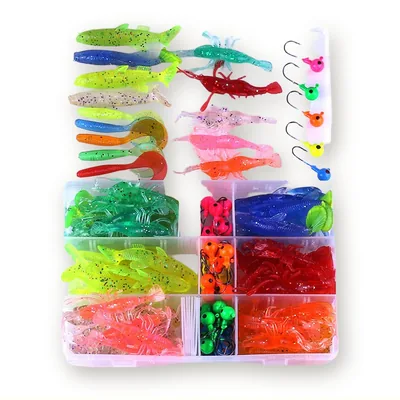
Soft shads, grubs, worms and creature baits are poured or injected from PVC or similar compounds. Material, softness, scent and salt content change handling and price. Colours and glitter are cheap to vary, but the mould and the compound are not.
Soft plastics fall under REACH. Phthalates in PVC are restricted, and the same material that is soft on a lure can raise questions on a grip or handle. We ask the factory for confirmation of the compound and give you the report where it exists. Pack counts matter too: the number of pieces per bag, and the bag size, affect shelf space and shipping cost.
Spoons, spinners and metal jigs
Metal lures are made from brass, steel or tungsten alloys. Finish, plating and paint decide how they look and wear. For leaded variants, remember the planned EU restriction and consider lead-free jig heads and lures in the same range. Specify blade shape, hook type and weight grades per pack.
Colours and kits
Offer fewer colours but make them clear. A natural, a bright and a dark pattern cover most waters. Adding glow, UV and metallic effects increases cost per colour, and every colour adds an inventory line for you. Lure kits, with a handful of models in one box, sell well as gifts and as starter sets. They also let a shop build a basket from a single SKU.
Packaging is half the product
Lures are bought by eye, so the pack matters. Typical options are a blister card, a clear tube, a box with inner trays or a zip bag with a header. Each choice affects cost, shelf display and how the lure is protected in transit.
- Artwork: send vector files, and check that colour names match the lure.
- Barcode: we can add EAN codes.
- Language: the label should be in the language of the country of sale for warnings and use instructions.
- GPSR: name and postal address, and e-mail, plus type or batch number.
Our private label page lists what can carry your logo and the minimum per model (300).
Hooks, rings and the details buyers notice
Anglers judge a lure by its hardware. Cheap treble hooks that blunt after a few casts, split rings that open under load, and thin plating that flakes all end in returns and bad reviews. Ask the factory for the hook brand or wire specification, the ring strength and the plating type, and check these on the sample. Stronger hooks cost more per lure, but the difference is small next to the retail price.
Consider offering a hook upgrade as part of the range. A premium line with sharper, stronger hooks lets you price above the entry range without redesigning the body.
Naming and range structure
Give each lure a clear name, a size in mm and g, and a species or technique label. A range built around three or four techniques, such as pike, perch, trout and sea, is easier to explain than a random mix. Plan the colour chart once, then repeat it across models so that customers can match lures from the same family. Avoid copying the exact look of well-known brands: your range should have its own identity and avoid design and trademark conflicts.
Samples, approval and timing
Order samples first (7–14 days). Check the swim, the hook strength, the paint and the pack. After approval, production takes 25–45 days, and transport to Poland takes 25–45 days by rail or sea. If you want the range for spring, place the private label order by mid-December.
Cost drivers to ask about
- Mould cost for a new shape, and who owns the mould.
- Colour cost per pattern and minimum per colour.
- Hook quality and the number per lure.
- Packaging type and print method.
- Quantity breaks per model, not per order.
Checks before shipment
For lures, inspection looks at paint defects, flash on the body, hook sharpness, split-ring closure, weight consistency and pack contents. A report with photos is part of our service, as described on the quality page. We do not promise catch rates, and your product pages should not either.
Selling the range
Online sellers need clean photos, a weight and length in every title, and a video of the action if possible. Shops need a display: a hook board, a clear tube rack or a counter box. Ask us about display cartons when you order, as they are easier to add before packing than afterwards. Wholesale buyers such as tackle shops and online sellers often differ in the pack sizes they prefer.
Repeat orders are simpler than the first one: the mould, colours and artwork are already approved, so only quantities and dates change.
Start small, then scale
Send us your target lure types, species and price level. We propose catalogue models and, where needed, a custom design, with MOQ and lead times in the offer.