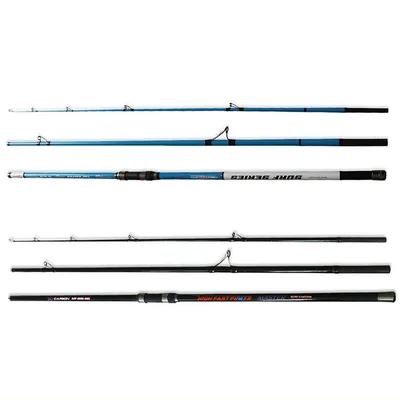
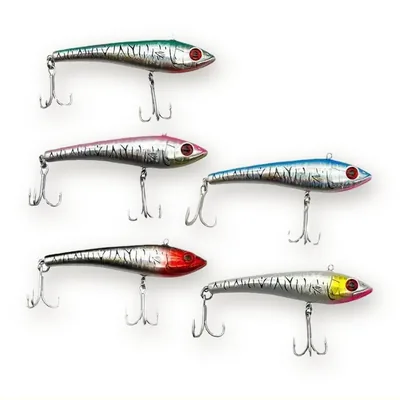
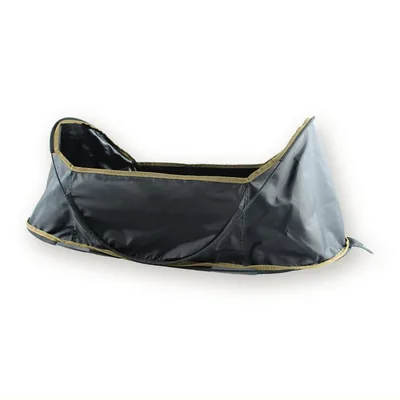
1. Start from your channel and your season
A tackle shop needs breadth in small quantities. An online seller needs a handful of products under one brand. A commercial fishery needs a fixed number of chairs, nets or weights. Write down the retail price you aim for, the quantity you can sell in one season and the countries you sell in.
Then check the calendar. Spring predator and coarse fishing starts in March–April, the carp season runs from April to October and ice fishing needs stock by December. Our how it works page shows the order dates that follow from this.
2. Find manufacturers, not only listings
Factory marketplaces show many near-identical offers, and plenty come from trading companies. Ask for the business licence, the company’s age and export history, and a video call from the production floor. If you plan to put your brand on a rod or lure, you want the factory that makes it.
Specialisation matters. A plant that moulds soft plastics is rarely the best source of rod blanks, and a line spinner does not make landing nets. Expect to work with several partner factories for a full range.
3. Compare quotes on delivered cost
Send each supplier the same specification and ask for the following:
- price per piece, set or pack, and the MOQ for each model;
- packaging type, inner pack quantity and carton size;
- gross weight per carton;
- production time and payment terms.
Carton data matters more than the unit price. Rods ship in long cartons, chairs and bedchairs take volume, while hooks and weights are dense and heavy. The cheapest unit can become the most expensive delivered product once freight is added.
4. Sample the way your customers will use the tackle
Load the rod to its stated casting weight and check the blank, ring guides and joints. Run the reel under tension and listen for roughness. Check hook points, finish and wire diameter against the specification. Soak the line and test knots. Open the chair and leave your weight on it.
Keep one approved sample as the reference for production and inspection. Our samples page explains how sample costs are credited against the order.
5. Agree terms in writing
The contract should hold the specification, packaging, labels, delivery date and quality standard. If your logo goes on a blank, handle, spool or lure packaging, approve a pre-production sample before mass production. A typical split is a deposit of 30–50 % with the balance before shipment.
6. Inspect before the goods leave
Fixing a problem after arrival is slow and costly. A pre-shipment inspection checks quantity, workmanship, function, packaging and labels on a statistical sample (AQL). For tackle, that means rod alignment and guide wraps, reel handle play, hook sharpness, paint finish on lures and seam strength on bags. Pay the balance after you have seen the report. More detail is on our quality page.
7. Choose the transport
Sea freight usually suits bulky goods such as chairs and shelters. Rail is a middle route for mixed orders, and air is for samples and urgent light goods. Planning figures are 25–45 days by rail or sea to Poland and 7–12 days by air. Allow for space filling up before the factory holidays in late January–February, which stop production for several weeks.
8. Customs, duty and VAT
The importer of record files the import declaration, pays duty according to the tariff code and pays import VAT. You also need an EORI number. Duty differs between rods, reels, lures and clothing, so check the code for each item before you calculate your margin.
9. Make the product legal to sell
Under the GPSR (Regulation (EU) 2023/988) every consumer product needs an EU economic operator, a name and postal address on the product or packaging, a type or batch reference and warnings in the language of the country of sale. Beyond that:
- soft lures and grips are checked for phthalates and PAH under REACH;
- bite alarms and headlamps need CE marking (EMC, RoHS) and battery rules apply;
- lead weights and lures face a planned restriction, so many buyers add lead-free tackle now;
- packaging needs registration where producer responsibility schemes apply, such as LUCID in Germany.
Common mistakes buyers make
- Ordering by the photo. Two rods with the same listing can differ in blank material, guide quality and reel seat. Ask for the blank (carbon or fibreglass, carbon content if stated), action, power, sections and ring guide type.
- Ignoring pack sizes. A hook price per 100 and a price per pack of 10 are easy to confuse. Write the unit into every comparison.
- Skipping the language question. Warnings and instructions must be in the language of the country of sale. A shop selling in Germany, Poland and France needs three sets.
- Mixing seasons. Ice fishing rods and carp bedchairs sell at opposite ends of the year. Splitting the order across two shipments often saves cash flow.
- Late private label. Logo work needs artwork approval, a pre-production sample and then production. For spring stock, start by mid-December.
A simple ordering plan
Many buyers use three steps. First, buy catalogue products in small quantities to test demand and quality. Second, repeat the best sellers with your logo on the packaging or the blank. Third, add products made to your own specification, such as a rod range with your own action and finish.
Each step needs more commitment: samples at first, then a deposit and a production slot. The earlier you choose the product, the more time there is for sampling and compliance checks. Our pricing page explains how prices step down with quantity.
Keep a simple file for each model: specification, approved sample photo, price, MOQ, carton data and compliance documents. When a customer or authority asks questions two years later, that file saves days of searching.
10. The alternative: buy through an EU importer
If you would rather not be the importer, buy through one. You get an EU invoice, inspected goods, a delivered price and the documents for the products. That is what we do at TackliQ sourcing. Send us your product list and compare our offer with your own calculation.