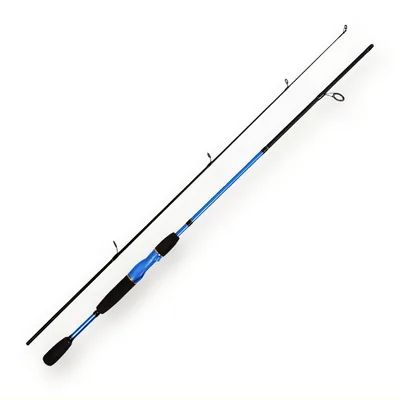
The blank is the rod
The blank is the tube that forms the rod without guides or handle. Most of the value and performance sits here. The main materials are:
- Carbon fibre: light and sensitive. Carbon content and modulus vary, and cheaper blanks use a lower content with glass fibre.
- Fibreglass: heavier, more flexible and tougher. Common in telescopic, kids’ and boat rods.
- Composite: a mix of both, which balances price and durability.
Ask for the carbon percentage if the factory declares it, and for the wall thickness at the butt and tip. Do not rely on “high modulus” as a claim without a figure.
Length, sections and transport
Length in metres or feet and the number of sections decide how the rod packs. One-piece rods feel best but take long cartons, while two-piece, multi-section and telescopic rods save space. Travel rods fold into short tubes. Rods ship in long cartons, so we quote delivered prices, and carton length affects the freight rate. See the rod catalogue for models by type: spinning, feeder, carp, telescopic, surf, travel, baitcasting and ice.
Action and power
Action describes where the rod bends: fast (tip), medium (upper half) or slow (full length). Power describes the load needed to bend it, usually from ultralight to heavy. Factories use different scales, so always confirm both against a stated casting weight in grams and a line range.
| Item | What to confirm |
|---|---|
| Casting weight | Range in g, the same for all sizes in the series |
| Line rating | Range in lb or kg |
| Action | Fast, medium or slow, with a test |
| Test curve (carp) | Rating in lb, measured at the stated length |
Test curve is used mainly for carp rods and describes the load for a ninety-degree bend. Check that the stated figure matches the length and the blank.
Ring guides
Guides carry the line, so their material and frame affect casting and wear. Options include stainless steel frames with ceramic or SiC inserts, single-foot or double-foot guides, and low-profile frames on baitcasting rods. Ask for the insert material, the number of guides and the size of the first guide. Inspect wrapping: thread should be even, and the epoxy should be smooth and free of bubbles.
Reel seat, handle and grips
The reel seat holds the reel, so test it with a real reel and check that nuts do not loosen. Handles come in EVA foam, cork, rubber or composites. Rubber and EVA parts that touch skin must meet REACH limits for PAH, and soft grips can raise phthalate questions. We request the information from the factory.
Finish and details
Check paint quality, logo position, hook keeper, butt cap, rod sleeve and tip protectors. Small details drive returns more than the blank does. A rod sleeve, rod tube or bag is also a place for your private label logo.
Matching rods to your customers
Think about who buys. A beginner wants a forgiving rod at a low price, often a telescopic or a two-piece in fibreglass. A coarse angler wants a feeder rod with several tips. A spinning angler wants a light, sensitive blank in carbon. A carp angler buys by test curve and expects a rod in two or three sections of 12 ft or longer. Kayak and boat anglers need shorter rods. Pick two or three models per type and cover the main price points, instead of ten similar rods.
Spare tips and extras
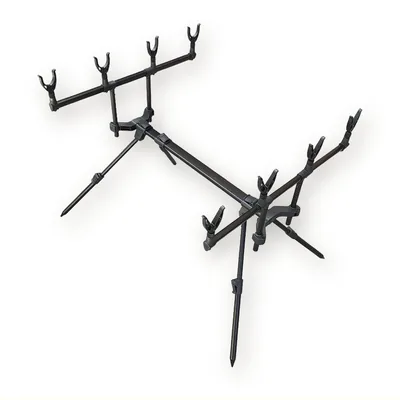
Feeder rods often come with several tips of different strengths. Ask whether spare tips are included, how they are marked and how they are packed. Spare tips are also a small add-on sale. Rod holders, tube protectors and Velcro straps are extra items that give you more to sell.
Ice, surf and specialist rods
Ice rods are short, light and cheap, but handle grip and tip action vary a lot and are best checked by sample. Surf rods are long and heavy, and their transport cartons are the longest in the range, so confirm carton length with the carrier before you order. Baitcasting rods need low-profile guides and a trigger seat. Each type has its own buyers, so order small quantities and expand once you see demand.
Testing a sample
- Check the straightness by rolling the blank on a flat surface.
- Flex the rod to the stated load and watch how the bend develops.
- Look at the joints for fit and alignment.
- Mount a reel and tighten the seat.
- Cast with the stated range of weights.
- Inspect wrapping, epoxy and handle bonding.
For bulk orders, pre-shipment inspection samples from each carton and checks length, sections, guide alignment, finish and packaging. The report comes with photos, as set out on our quality page.
Private label rods
You can choose blank, action, guides, handle, finish and logo on a rod to your own specification. This is the best way to build a range with identity. The minimum per model is 300, and production takes 25–45 days after approval. Spring rods need to be ordered by mid-December, and the details are on the private label page.
Questions to put in every request
- Blank material and carbon content, if declared.
- Length, sections, closed length and weight.
- Casting weight and line range.
- Guide type, insert material and number.
- Reel seat and handle material.
- Carton dimensions and rods per carton.
- Packaging, tube or sleeve, and label language.
Compliance and labelling
Rods are consumer products, so GPSR labelling applies. Add name and postal address of the EU operator, e-mail, a type or batch reference and warnings in the language of the country of sale. A warning about overhead power lines is common on carbon rods, and carbon is conductive, so state it. We do not claim certifications that we cannot show.
Keep a specification sheet for each rod. It should show the blank, guides, seat, handle, action and carton data, with a photo of the approved sample. It speeds up reorders and lets a second supplier match the rod if you ever need one.
Get an offer
Tell us the type, length and price level, and send us your request. The offer includes delivered price, MOQ and lead time (8–12 weeks).